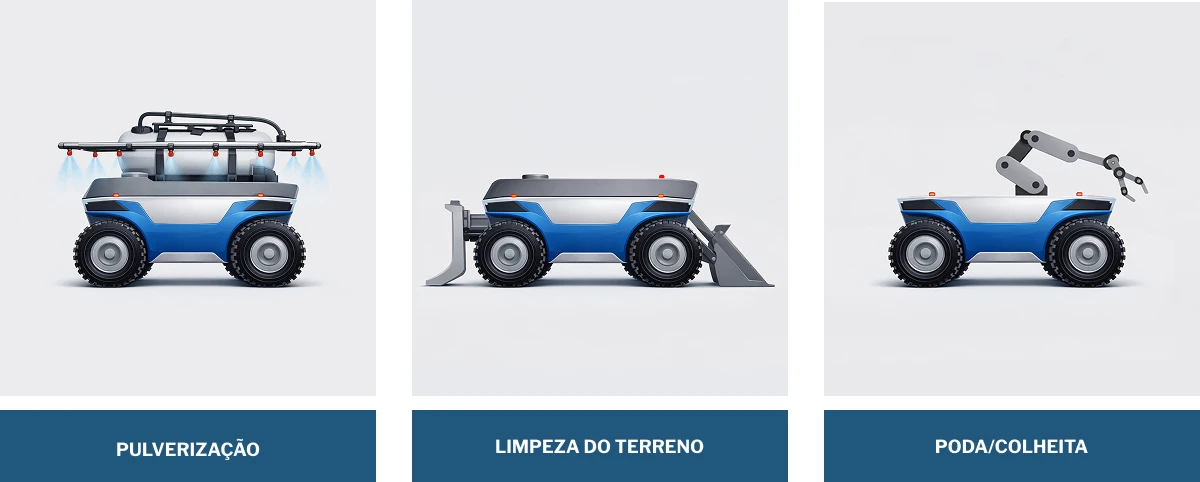
Agriculture and forestry face increasingly complex challenges: labor shortages, the need to increase productivity, cost pressures, and operations carried out in irregular and unpredictable environments. Developing autonomous systems for these contexts requires much more than navigation capabilities; it requires a deep understanding of the territory where they will operate.
As part of the European SCORPION project, led by INESC TEC, Everythink was challenged to design an autonomous platform capable of operating in the vineyards of the Douro region. The challenge was to transform advanced technology into a robust, safe solution prepared to face real-world usage conditions, without the need to adapt the terrain to the equipment.
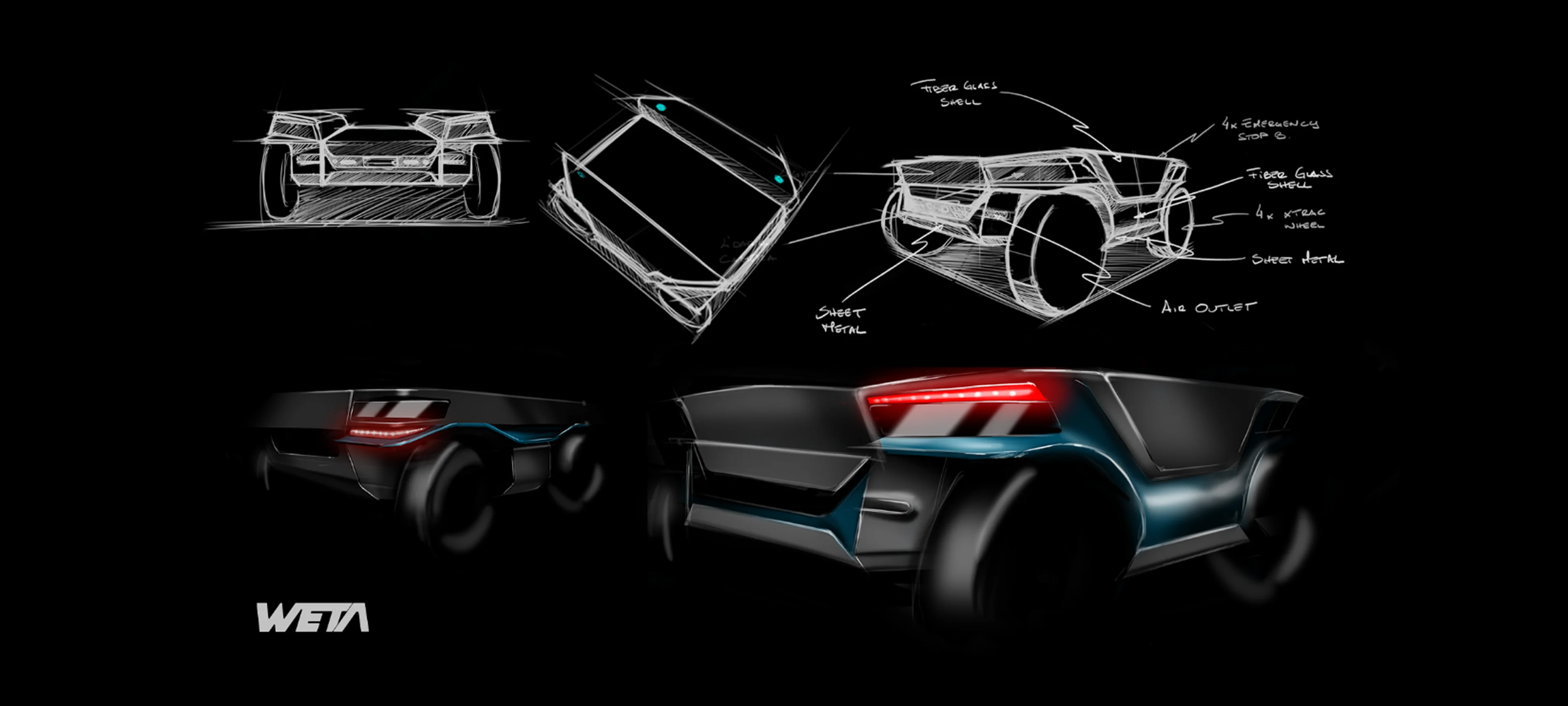
The development of the WETA Agrobot began with a simultaneous understanding of the technology, the market, and agricultural operations, allowing for the integration of mechanical, functional, and usage requirements from the start. Design was used as a development tool to balance robustness, versatility, identity, and performance, ensuring that every decision met the platform's technical demands.
The result was an autonomous vehicle with four-wheel drive, an articulated structure that ensures constant ground contact, and the integration of multiple LIDAR sensors for 360° vision. The architecture also includes a battery swap system, allowing for quick battery replacement to ensure continuous operation and reduce downtime in work environments.


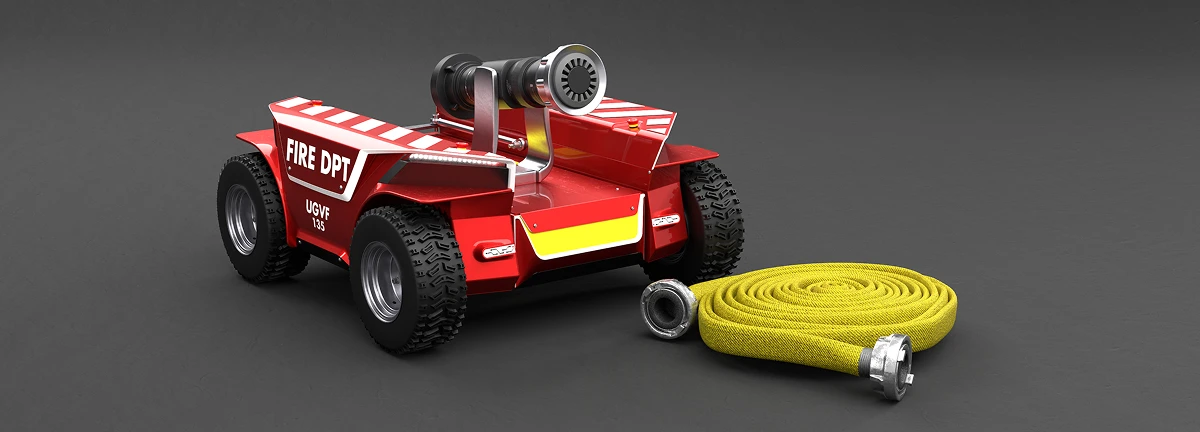
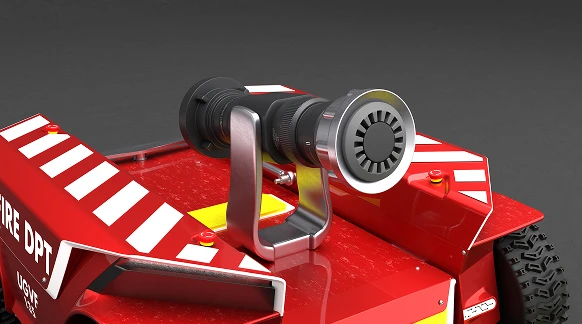
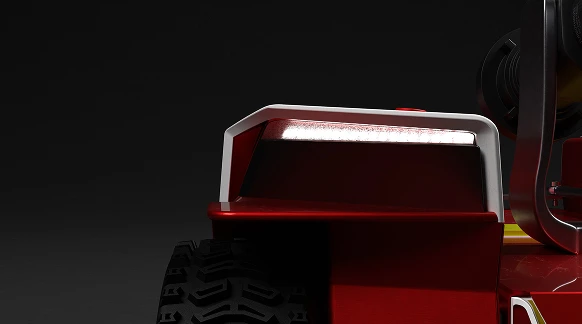
The result was an autonomous vehicle with four-wheel drive and an articulated structure, ensuring constant ground contact and high adaptability to uneven terrain. The integration of multiple LIDAR sensors provides 360° vision, allowing for safe navigation in complex environments, while the product's formal language simultaneously reinforces its identity, robustness, and technological character.
Each element was developed to meet the demands of real-world use, reconciling mechanical performance, technological integration, and ease of operation in a platform prepared for various agricultural and forestry applications.
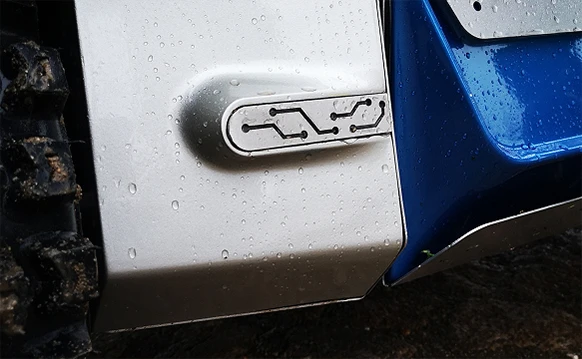
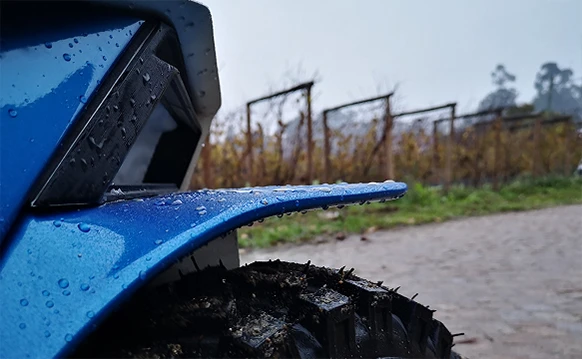
This project demonstrated how integrating design from the early stages of technological development allows for anticipating requirements, reconciling constraints, and creating more effective solutions ready for the market. More than just defining the shape of a piece of equipment, design helped structure the entire solution, transforming technological innovation into a functional, robust platform recognized internationally with the iF Design Award 2022.